Academics and programs
Learn It by
Living It.
Our curriculum model, in one sentence: a student learns a thing by doing it, is taught the academics that doing it requires, and proves they can do it again alone. Everything below follows from that one sentence.
Before
A task they cannot finish yet
A unit opens with something actual — a garden bed to plant, a menu to cook, a month of money to spend. The student meets the problem before the vocabulary, so the vocabulary has somewhere to attach.
During
The academic work, delivered on demand
Reading, writing, math and science are taught in service of the task. Measurement arrives because the bed needs measuring. Fractions arrive because a recipe halves. The standard is the same one a textbook would cover; the reason to learn it is not.
After
Reflection, then proof
Students name what they can now do. A skill only counts as finished when they can do it without help — and then the next unit raises the difficulty rather than repeating the same success.
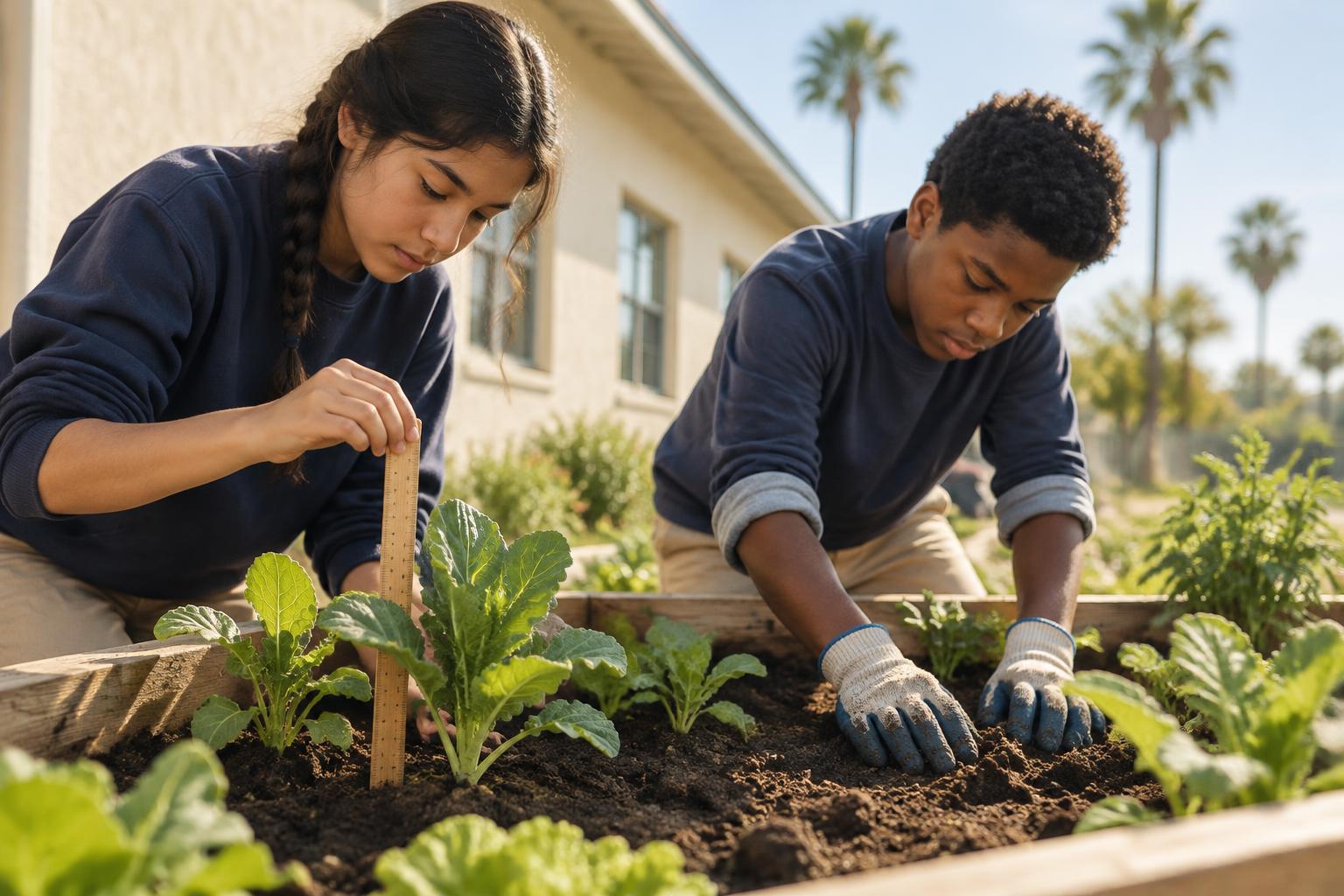
Living it, week nine
Measurement, biology and patience, taught in one raised bed behind the building.
The ruler is out because the row has to be spaced correctly. The standard is the same one a textbook covers; the reason to learn it is not.
Our programs
From academic
courses to vocational
training.
We offer a range of programs that cater to the diverse needs and interests of our students, designed to equip them with the knowledge and skills they need to succeed in their chosen field.
- 01
Academic courses
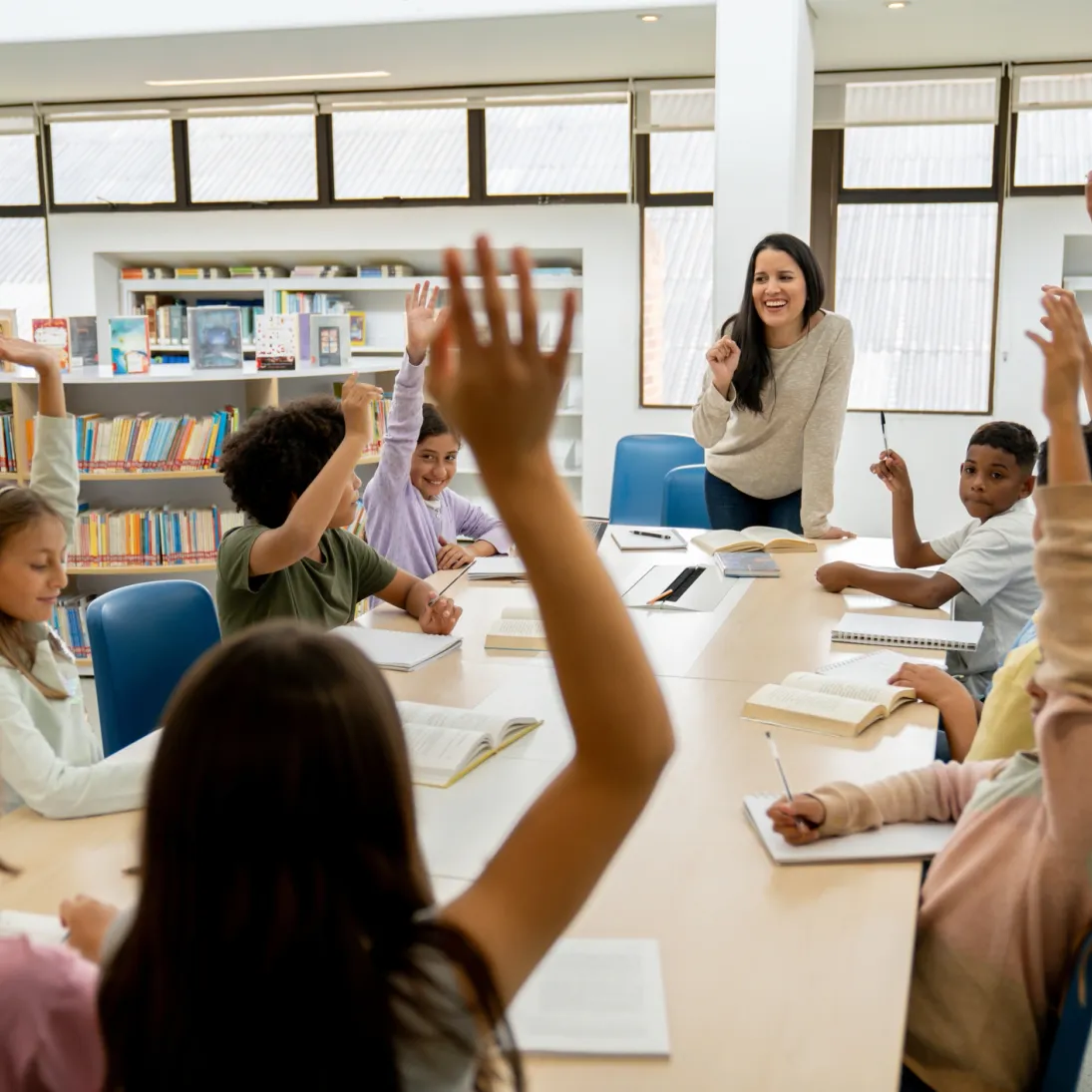
The core subjects a middle schooler needs for high school and beyond, taught in small groups so a gap is noticed the week it opens rather than at the end of a term.
- 02
Vocational training
Hands-on trade and career skills — the kind of work that shows a student what an adult day is actually like, and what they might want from one.
- 03
Personalized coaching
One adult who knows the whole child: what they are strong at, what they avoid, and what to do about it. Goals are set with the student and reviewed on a schedule.
- 04
Mentoring
Ongoing mentoring inside and outside the classroom, including adults from the business community around our learning environment.
Subjects on the timetable
- English language arts
- Reading, composition, and the habit of revising work someone else has to read.
- Mathematics
- Number sense through pre-algebra, applied where the project needs it.
- Science
- Life, earth and physical science through experiments, the garden and the kitchen.
- Social studies
- Florida, the United States, and the neighborhood students actually live in.
- Life skills lab
- The kitchen, the budget, the phone call, the planner, the repair.
- Advisory
- A small group and one adult, every week, responsible for the whole child.
Course placement in math and reading follows each student’s readiness, not only their grade level.
The four habits
How a unit
actually runs.
Four habits repeat in every subject and every grade. They are what make the model consistent rather than a collection of field trips.
- 01
Start with something real
Every unit opens with a real thing: a garden bed, a kitchen counter, a budget, a city block. The question comes before the vocabulary.
In the room: A new unit begins with a task students cannot finish yet.
- 02
Practice until it holds
Students do the work, not watch it. Skills are repeated in different settings until they carry over without a reminder.
In the room: The same skill shows up in class, in the kitchen, and on a project.
- 03
Name what was learned
Students reflect in writing and out loud, so they can say what they can now do that they could not do before.
In the room: A short written reflection closes each project.
- 04
Prove it, then move on
A skill counts when a student can use it without help. Until then, it is still being taught.
In the room: Advisors review academic and life skills together, not separately.
Our technology
Education
reimagined.
We use technology to make a small school bigger than its walls. A student’s course materials, their teachers and their classmates are reachable from anywhere — which is what makes personalized coaching possible in a school this size.

- 01
Course materials, always reachable
Our online platform lets a student reach their course materials from anywhere — so a missed day is not a lost week, and a family can see what is being worked on.
- 02
Direct contact with instructors
Students communicate with their teachers through the platform between class meetings: a question about an assignment, a draft sent for feedback, a grade explained.
- 03
Work together from anywhere
Peers can collaborate on the same project outside the room. For a small school, that means a group is never limited by who is in the building that hour.
- 04
Taught, not just handed over
A device is a tool, not a reward. Students are taught how to use it for schoolwork, and how to put it down when the work calls for hands, eyes or a conversation.
Presentation
Every student presents.
Every quarter.
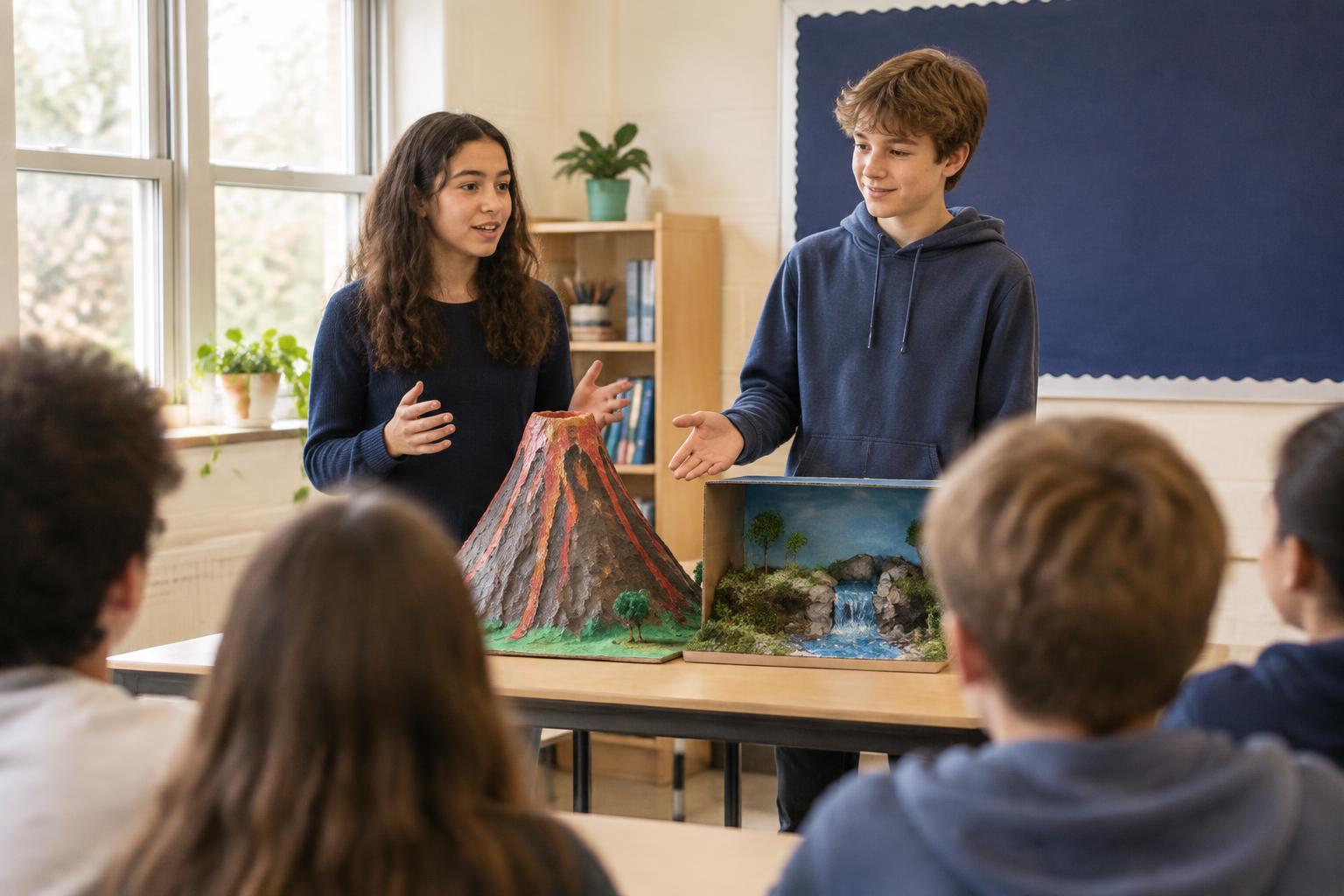
At the close of each quarter, students stand in front of their peers and adults and explain work they made. The first time is hard. The fourth time is a habit. By eighth grade a student has done it a dozen times, which is why our graduates can talk to an adult without shrinking.
It is also our best assessment. You cannot coast through explaining your own thinking to a room.
Apply or inquire